
Were Bible Authors Really" Primitive Goat Herders"? The historical evidence reveals kings, physicians, and elite scholars—not the uneducated writers you've been told about.
.
5/8/20242 min read
The Myth of the Uneducated Bible Authors
One of the most persistent criticisms of the Bible is that it was written by primitive, uneducated goat herders—a convenient image used to dismiss its contents as simplistic musings from a pre-scientific culture.
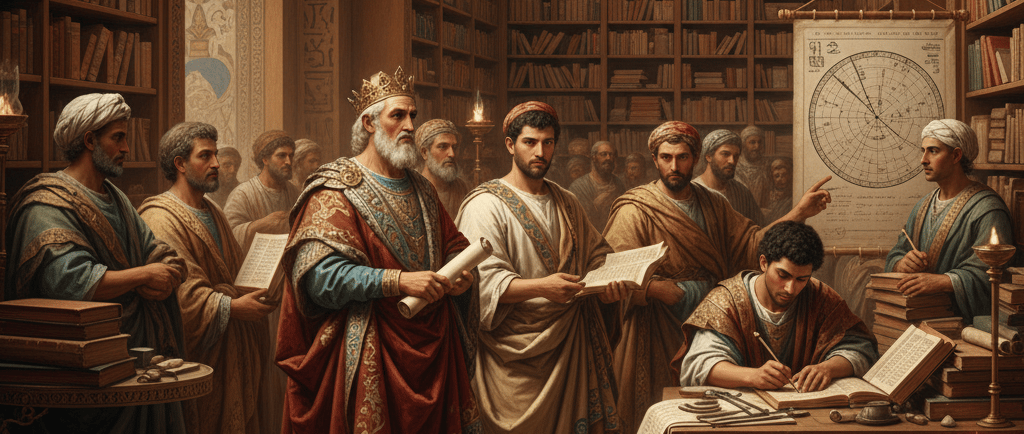
But this common claim is a myth that doesn't hold up to historical scrutiny. The Bible was actually penned by a diverse group of sophisticated, intelligent, and often highly educated individuals.
The Intellectual Powerhouse: The Apostle Paul
Let's start with the man who wrote nearly one-third of the New Testament. Before becoming the Apostle Paul, Saul of Tarsus was a Pharisee—part of a highly educated, intellectual Jewish sect whose training involved rigorous study of law, history, and theology from childhood. Paul studied under Gamaliel, one of the most celebrated rabbis of the era.
His intellect was so formidable that even a Roman official took notice. In Acts 26, as Paul delivers a sophisticated legal and theological defense, Governor Festus interrupts: "You are out of your mind, Paul! Your great learning is driving you insane."
Festus wasn't calling him simple—he was overwhelmed by Paul's intellectual depth. And when Paul visited Athens, he went head-to-head with Epicurean and Stoic philosophers, engaging the most advanced philosophical schools of ancient Greece on their own turf.
A Doctor and a Tax Collector
The other Gospel writers were equally accomplished:
Luke was a physician—a complex field requiring extensive study in the ancient world. His writings show precise historical detail, careful investigation, and refined Greek literary style.
Matthew was a tax collector, which required literacy, numeracy, and knowledge of business and multiple languages. He was essentially a professional in the Roman-era financial sector.
Old Testament Elite: Kings, Priests, and Royal Scribes
The intellectual credentials continue in the Old Testament:
Daniel was selected for Babylon's royal court and educated for three years in "the language and literature of the Babylonians"—the equivalent of attending the most elite university in the ancient world.
Ezekiel, Ezra, and Nehemiah were priests—part of the educated class responsible for preserving and teaching Israel's law and history. Ezekiel's intricate symbolism and precise literary structure reveal a masterful mind, while Ezra and Nehemiah demonstrate sophisticated administrative skills.
The books of Samuel, Kings, and Chronicles were almost certainly written by professional scribes and historians attached to the royal court, with access to state archives and tasked with documenting official history.
Time to Rethink the Narrative
The "uneducated goat herder" trope is a convenient way to sidestep the Bible's complex content. It's easier to dismiss a document if you first discredit its authors as ignorant.
But history tells a different story. The Bible was written by kings and physicians, philosophers and priests, tax officials and trained scribes—some of the most literate, intelligent, and culturally engaged people of their day.
So the next time you hear this myth repeated, you can confidently say that the biblical authors were anything but primitive. They were, in fact, a collection of sophisticated thinkers whose works have captivated, challenged, and inspired the world for millennia.